Anti-Counterfeit Labels for Agricultural Products
Anti-counterfeit solutions for agricultural products: protecting regional specialties, traceability, meeting export standards, and building agricultural brands.
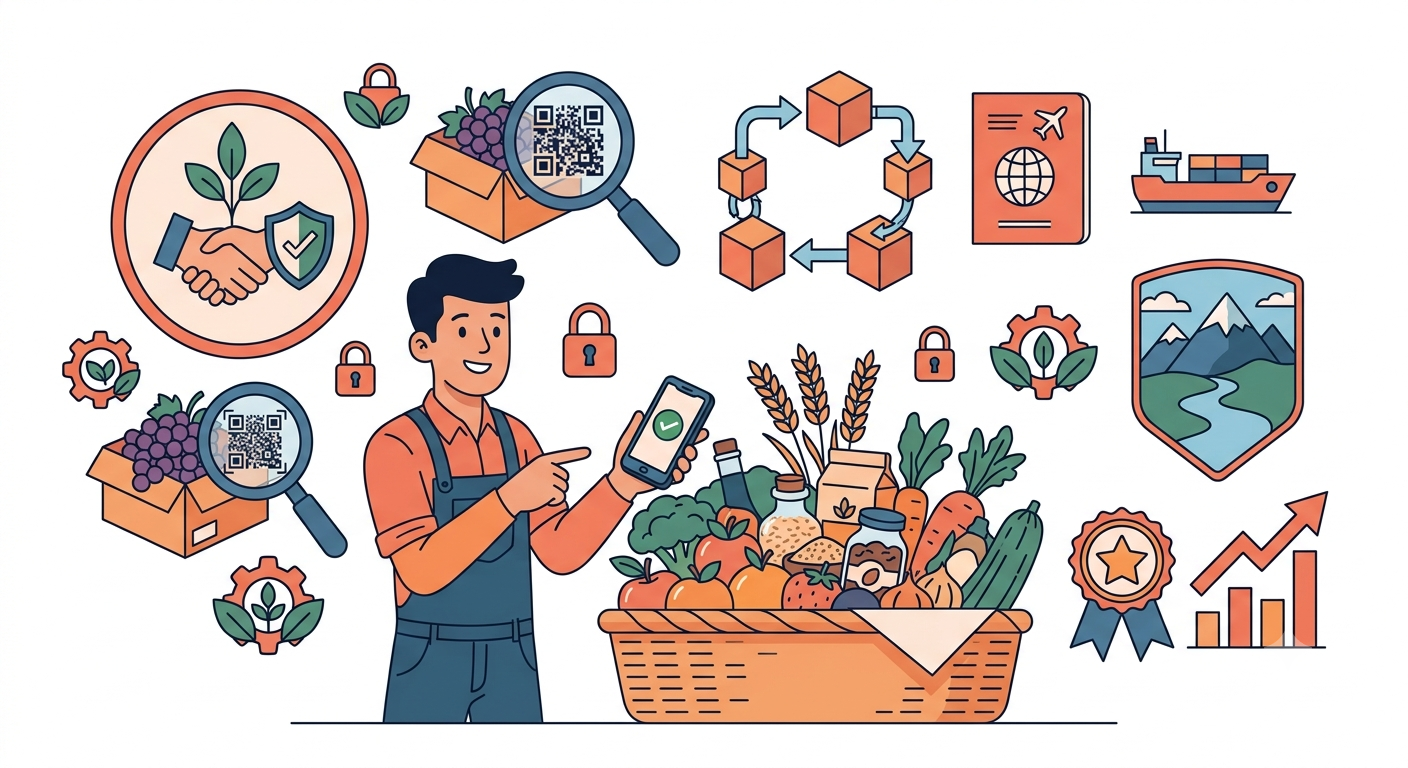
Anti-Counterfeit Labels for Agricultural Products
Vietnamese agricultural products are increasingly valued in domestic and international markets. But when agricultural brands become famous, counterfeits appear — fake fragrant rice, adulterated coffee, honey mixed with sugar water, fake pepper. Anti-counterfeit labels for agricultural products don’t just prevent counterfeiting — they’re tools for traceability, brand building, and meeting export standards.
Counterfeiting Reality in Agriculture
Most Counterfeited Products
- Fragrant rice: Regular rice packaged in fragrant rice bags, sold at premium prices
- Coffee: Mixed with corn flour, soy flour, and flavorings
- Honey: Mixed with sugar water, thickening agents
- Black pepper: Fake peppercorns made from flour and dyes
- Beef: Pork or buffalo meat injected with water and coloring
- Fermented pork, sausages: Produced without hygiene standards
- Cashew nuts: Mixed origins, repackaged
Consequences
- Consumers are deceived: Buying fakes at genuine prices
- Businesses lose market share: Counterfeits sold cheaper, unfair competition
- Regional brands erode: Fake “ST25 rice” flooding the market damages real rice reputation
- Exports affected: International partners lose trust when discovering counterfeits
Why Do Agricultural Products Need Anti-Counterfeit Labels?
Protecting Regional Specialties
Many Vietnamese agricultural products have Geographical Indications (GI) or collective brands:
- ST25 rice (Soc Trang)
- Buon Ma Thuot coffee
- Hung Yen longan
- Thanh Ha lychee
- U Minh wild honey
When brands become famous, counterfeits mix in. Anti-counterfeit labels help consumers distinguish genuine products and protect specialty value.
Traceability
Consumers increasingly care about food origins:
- Where was it grown?
- Who produced it?
- What farming methods were used?
- Were chemicals used?
- When was it harvested?
QR code labels provide all this information in a single scan.
Meeting Export Standards
Many export markets require traceability:
- EU: Requires traceability for imported agricultural products
- USA: FDA requires origin documentation
- Japan: Strict food safety standards
- China: Requires QR code traceability for many product categories
Increasing Product Value
Agricultural products with QR codes and clear traceability sell at higher prices:
- Consumers willingly pay more for products with clear origins
- Supermarkets and convenience stores prioritize products with labels
- Export at better prices
QR Code Solutions for Agricultural Products
Label Design Considerations
- Material: Water-resistant, moisture-resistant (agricultural products often stored in humid environments)
- Durability: Labels must survive transportation and storage
- Size: Appropriate for agricultural packaging (bags, boxes, bottles, jars)
- Direct printing: QR codes can be printed directly on packaging instead of labels
Information Displayed After Scanning
- Verification result: Authentic / previously verified / invalid
- Product information: Name, type, quality classification
- Origin: Province/district/commune, farm or cooperative name
- Farming process: Organic, VietGAP, GlobalGAP certified
- Harvest date: When the product was harvested
- Storage instructions: Temperature, humidity, shelf life
- Recipes: Adding value for consumers
Application by Product Type
Rice
- Label on rice packaging
- Scan to see: Rice variety, growing region, harvest season, milling process
- Distinguish real vs fake ST25 rice
Coffee
- Label on packaging or printed directly on box
- Scan to see: Bean type (Robusta/Arabica), growing region, processing method, roast level
Honey
- Label on bottle/jar
- Scan to see: Nectar type, harvest region, harvest date, quality test results
Fruits and Vegetables
- Label on packaging or sticker on individual items
- Scan to see: Growing region, farming process (VietGAP), harvest date, pesticides used
Benefits for Agricultural Businesses
Brand Building
- QR code labels demonstrate professionalism
- Consumers remember brands more easily
- Creates differentiation from unlabeled products
Distribution Management
- Track products from farm to retail
- Detect counterfeits and imitations
- Effective distributor management
Price Protection
- Counterfeits sold cheaply disrupt market prices
- Anti-counterfeit labels help consumers distinguish → avoid buying fakes
- Maintain pricing for genuine products
Market Expansion
- Access supermarkets and convenience stores (requiring traceability)
- Export to demanding markets
- Participate in agricultural marketplaces and organic markets
Implementation Guide for Cooperatives and Farmers
Step 1: Register on a Platform
Choose a QR code platform suitable for agriculture with affordable pricing.
Step 2: Set Up Product Information
Enter agricultural product details: name, origin, farming methods, certifications (VietGAP, organic).
Step 3: Generate and Print Labels
Create QR code batches for each harvest. Print labels or print directly on packaging.
Step 4: Apply Labels and Distribute
Apply labels to packaging before distribution. Guide consumers to scan codes.
Step 5: Monitor and Analyze
View dashboard reports: scan counts, locations, consumer feedback.
Conclusion
Anti-counterfeit labels for agricultural products protect brands, ensure quality, and build consumer trust. With low costs, QR code labels serve both anti-counterfeiting and traceability purposes, helping Vietnamese agricultural products increase value and access broader markets. QRS provides specialized QR code solutions for the agricultural industry, suitable for both cooperatives and large enterprises.
Found this helpful?
Explore more articles on this topic