Anti-Counterfeit Labels for Pharmaceuticals
Anti-counterfeit solutions for the pharmaceutical industry: life-threatening risks, strict regulatory requirements, QR code implementation, and supply chain traceability.
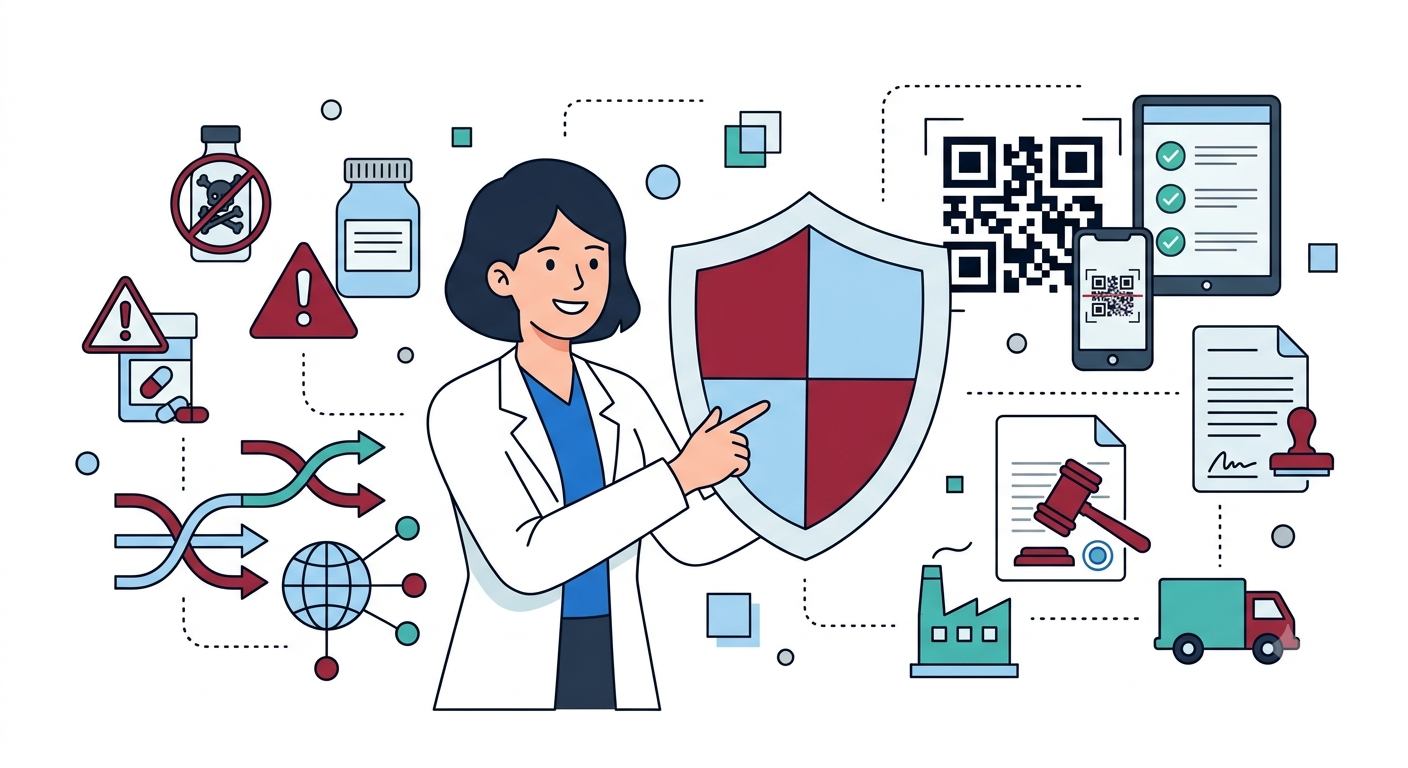
Anti-Counterfeit Labels for Pharmaceuticals
Counterfeit pharmaceuticals are a crime against public health. Fake medicines don’t cure diseases, cause severe adverse reactions, and can lead to death. According to WHO, counterfeit drugs account for 10-30% of the market in developing countries. Anti-counterfeit labels for pharmaceuticals aren’t just a business solution — they’re a moral responsibility.
Risks from Counterfeit Pharmaceuticals
Types of Counterfeit Drugs
- No active ingredient: Completely fake, containing only starch or sugar
- Insufficient active ingredient: Contains real drug but at lower concentration
- Wrong active ingredient: Contains different ingredients than labeled
- Expired drugs: Genuine drugs past expiry with altered dates
- Substandard drugs: Produced in non-GMP conditions
Health Consequences
- Failure to treat: Patients believe they’ve taken medication but it has no effect
- Drug resistance: Low active ingredient concentrations create resistant strains
- Severe adverse reactions: Wrong ingredients cause anaphylaxis, organ damage
- Death: Especially with counterfeit cardiovascular and cancer drugs
Alarming Numbers
- WHO estimates thousands die annually from counterfeit drugs
- Counterfeit antimalarials in Africa cause approximately 100,000 deaths per year
- In Vietnam, authorities continuously discover counterfeit drugs in circulation
Strict Regulatory Requirements
Traceability Regulations
The Ministry of Health requires pharmaceutical companies to:
- Track each drug batch from production to point of sale
- Have product recall systems in place
- Maintain distribution records for at least 5 years
- Report anomalies to regulatory authorities
Anti-Counterfeit Requirements
- Prescription drugs must have anti-counterfeit measures
- Specialty drugs (cancer, HIV, narcotics) need the highest security
- Labels must contain complete, accurate information
QR Code Solutions for Pharmaceuticals
Label Design Requirements
- Material: Water-resistant, moisture-resistant, heat-resistant
- Size: Appropriate for medicine boxes and bottles
- Color: Compliant with pharmaceutical labeling regulations
- Durability: Labels must last throughout the drug’s shelf life
Multi-Layer Security Structure
Layer 1: Visible QR Code
- QR code printed on the outer box label
- Quick verification scanning
- Displays basic information for patients
Layer 2: Hidden QR Code or Secondary Code
- Hidden code under scratch-off layer or UV ink
- For pharmacists and healthcare professionals to verify
- Displays more detailed information
Layer 3: Hologram or NFC
- For specialty and high-value drugs
- Physical security combined with digital verification
Information Displayed After Scanning
For patients (Layer 1 scan):
- Verification result
- Drug name, strength, dosage form
- Registration number, batch number, expiry date
- Brief usage instructions
- Advisory hotline
For pharmacists/healthcare professionals (Layer 2 scan):
- Detailed verification information
- Full ingredients, pharmacology
- Drug interactions, contraindications
- Batch origin, distribution channel
Pharmaceutical Supply Chain Management
End-to-End Tracking
- Manufacturing plant → Central warehouse → Hospital pharmacy → Retail pharmacy → Patient
- QR code scanned at each transfer point for recording
- System alerts if drugs appear in incorrect channels
Anomaly Detection
- Same batch appearing in two distant regions simultaneously
- Code scanned too many times → counterfeits using real codes
- Drugs distributed but not passing through any intermediary → leak
Product Recall
When recall is needed:
- Know exactly which batches need recalling
- Know where drugs are in the distribution chain
- Quickly notify relevant points
Benefits for Pharmaceutical Companies
Regulatory Compliance
- Meet Ministry of Health traceability requirements
- Ready for new serialization regulations
- Effective cooperation with regulatory authorities
Patient Protection
- Ensure patients use genuine medications
- Reduce incidents from counterfeit drugs
- Build trust with patients and healthcare professionals
Brand Protection
- Counterfeits destroy reputation quickly
- Anti-counterfeit labels prove quality commitment
- Increase trust with partners and investors
Distribution Management
- Accurately track drugs in circulation
- Detect illegal distribution channels
- Optimize inventory and allocation
Conclusion
Anti-counterfeit labels for pharmaceuticals are mandatory both legally and ethically. Counterfeit drugs directly endanger patients’ lives, and QR code anti-counterfeit labels are the most effective solution to prevent this. QRS provides specialized anti-counterfeit solutions for the pharmaceutical industry with multi-layer security, traceability, and supply chain management.
Found this helpful?
Explore more articles on this topic