Top Anti-Counterfeit Solutions in Vietnam
A comprehensive overview of the top anti-counterfeit label solutions in Vietnam: QR code, SMS, NFC, hologram. Compare pros and cons to choose the right solution for your business.
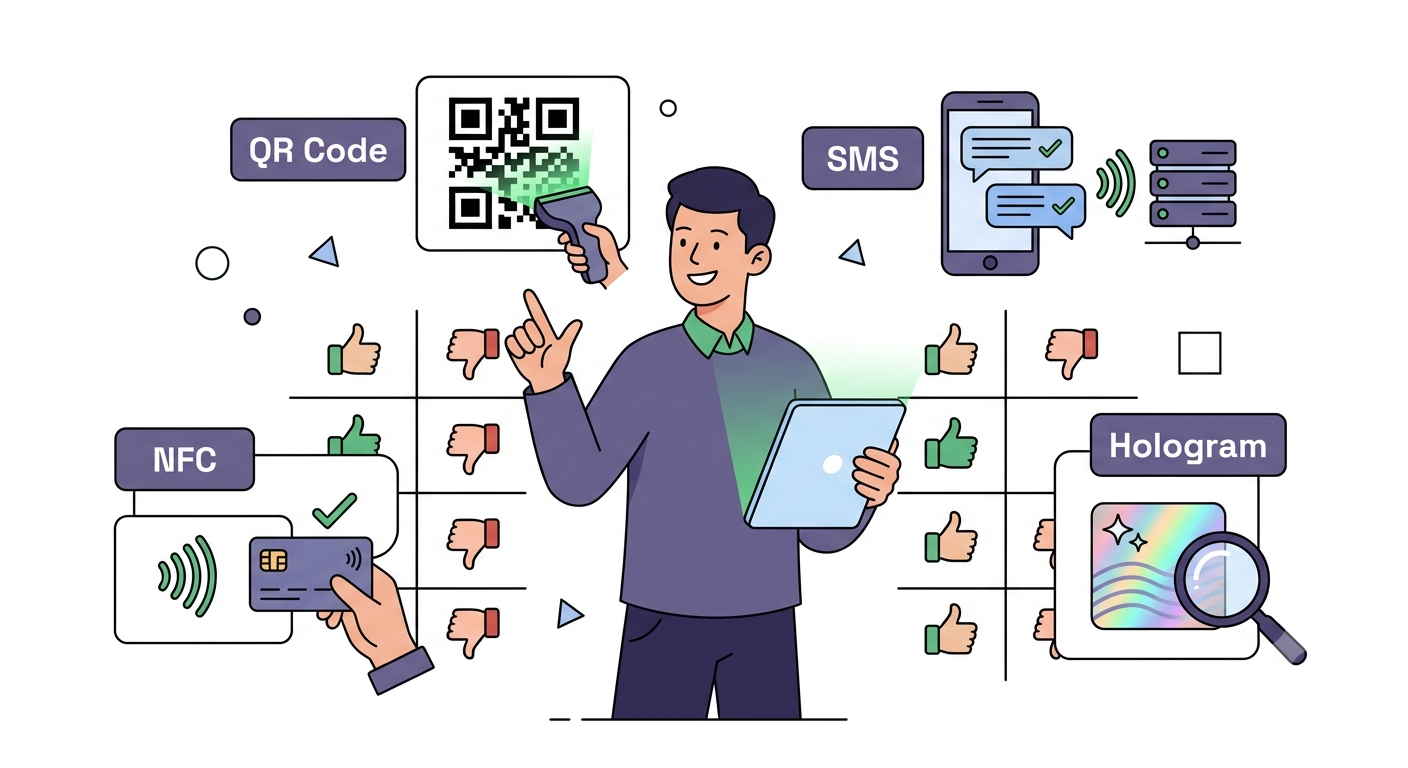
TL;DR: Vietnam’s anti-counterfeit label market spans five main options — QR code, SMS, hologram, NFC, and combined hologram + QR. For most Vietnamese businesses, QR code labels deliver the best balance of low cost (200-500 VND/label), fast verification, and rich consumer data, while combined hologram + QR or NFC suits high-risk and premium products.
Top Anti-Counterfeit Solutions in Vietnam
Vietnam’s anti-counterfeit label market is growing rapidly with diverse solutions. From traditional holograms to modern QR codes, businesses have many options for brand protection. This article covers the top solutions and helps you choose the right one.
1. QR Code Anti-Counterfeit Labels
Overview
QR code anti-counterfeit labels are the most popular solution in Vietnam due to low cost, easy deployment, and high effectiveness. Each product gets a unique QR code that consumers scan with their phones to verify.
Strengths
- Lowest label cost (200-500 VND/label)
- Fast verification (1-2 seconds)
- Detailed consumer data collection
- Integrates with marketing and promotions
- Easy deployment, no specialized equipment
- Flexible content updates
Weaknesses
- Requires internet connection when scanning
- Users need a smartphone
Best For
- Diverse industries: cosmetics, food, pharmaceuticals, agriculture
- Businesses of all sizes, especially effective for SMBs
2. SMS Verification Labels
Overview
SMS labels have been popular in Vietnam for years. Consumers scratch the label, send a text to a hotline, and receive authentication results via return message.
Strengths
- No internet or smartphone required
- Suitable for older demographics and rural areas
- Familiar to Vietnamese consumers
Weaknesses
- Very low verification rate (2-5%)
- SMS cost for consumers
- Slow (10-30 seconds per check)
- Easy to fake the SMS system
- Limited data collection
Best For
- Products distributed in rural areas
- Target customers are older demographics
3. Hologram Labels
Overview
Hologram labels use 3D optical effects that look impressive and professional. Common on alcohol, cosmetics, and electronics.
Strengths
- Enhances product aesthetics
- Easy to spot visually
- Reasonable cost for large volumes
Weaknesses
- Widely replicated
- Consumers can’t distinguish real from fake
- No digital verification channel
- No data collection
Best For
- Products requiring high aesthetics (alcohol, cosmetics)
- Best combined with QR codes for enhanced security
4. NFC Labels
Overview
NFC labels use near-field communication chips. Consumers tap their phone on the label to authenticate. A premium solution with very high security.
Strengths
- Optimal experience (tap to check)
- High security, NFC chips hard to clone
- Aesthetic, no printed code needed
Weaknesses
- Highest cost (5,000-20,000 VND/label)
- Not all phones support NFC
- More complex deployment than QR codes
Best For
- Premium, luxury products
- Wine, watches, high-end cosmetics
5. Combined Hologram + QR Code Solution
Overview
This combined solution uses holograms for visual identification and QR codes for digital authentication. The most comprehensive solution available today.
Strengths
- Dual security: physical + digital
- Quick visual identification via hologram
- Detailed verification via QR code
- Complete data collection
Weaknesses
- Higher cost than QR code alone
- More complex printing process
Best For
- Products with severe counterfeiting risks
- Businesses needing strong brand protection
- Pharmaceuticals, premium cosmetics, alcohol
Comparison Overview
| Solution | Cost | Security | Experience | Data | Deployment |
|---|---|---|---|---|---|
| QR Code | ★★★★★ | ★★★★ | ★★★★★ | ★★★★★ | ★★★★★ |
| SMS | ★★★★ | ★★★ | ★★ | ★★ | ★★★★ |
| Hologram | ★★★★ | ★★ | ★★★ | ★ | ★★★★ |
| NFC | ★★ | ★★★★★ | ★★★★★ | ★★★★ | ★★★ |
| Hologram + QR | ★★★ | ★★★★★ | ★★★★★ | ★★★★★ | ★★★ |
Selection Criteria
1. Budget
- Low budget: Start with QR codes
- Medium budget: QR codes + nice label design
- High budget: Hologram + QR code or NFC
2. Product Type
- Mass market: QR codes
- Mid-range: QR codes + hologram
- Premium: NFC or hologram + QR code
3. Target Customers
- Young, urban: QR codes
- Older, rural: SMS or QR + SMS
- Premium customers: NFC
4. Counterfeit Risk Level
- Low risk: QR codes alone
- Medium risk: QR codes + data analytics
- High risk: Hologram + QR code + NFC
Trends in Vietnam
QR Codes Replacing SMS
Smartphone penetration in Vietnam has exceeded 70%, making QR codes more convenient than SMS. Young consumers don’t send SMS but scan QR codes daily.
Marketing Integration
Businesses use labels not just for anti-counterfeiting but as a marketing channel: directing to social media, promotions, and customer surveys.
Traceability Requirements
Many industries now require product traceability (food, pharmaceuticals). QR code labels serve both anti-counterfeiting and traceability purposes.
Conclusion
QR code anti-counterfeit labels are the optimal solution for most Vietnamese businesses due to low cost, high effectiveness, and data collection capabilities. For businesses needing higher security, the combined hologram + QR code solution is perfect. QRS provides QR code anti-counterfeit solutions with a professional management platform suitable for every business in Vietnam.
Frequently Asked Questions
Which anti-counterfeit label is cheapest to deploy in Vietnam?
QR code labels are the lowest-cost option, typically 200-500 VND per label, with no specialized scanning equipment required — consumers verify using their own smartphones. This makes QR codes the most accessible entry point for small and medium-sized Vietnamese businesses.
When should a business choose NFC over QR codes?
NFC labels (5,000-20,000 VND/label) are best for premium, luxury, or high-counterfeit-risk products such as wine, watches, and high-end cosmetics, where NFC chips are significantly harder to clone than printed QR codes and the tap-to-verify experience matches premium brand positioning.
Why are QR codes replacing SMS verification in Vietnam?
Vietnam’s smartphone penetration has exceeded 70%, so consumers — especially younger, urban buyers — increasingly scan QR codes daily rather than sending SMS messages. SMS labels also suffer from a very low 2-5% verification rate and per-check SMS costs for consumers.
Can anti-counterfeit labels also support product traceability?
Yes. QR code labels in particular serve double duty: each unique code can both authenticate a product for the consumer and provide supply-chain traceability required in regulated industries such as food and pharmaceuticals.
Sources
- Trends in Trade in Counterfeit and Pirated Goods (OECD/EUIPO, 2019) — landmark OECD/EUIPO study quantifying the global scale of counterfeit trade.
- EUIPO and OECD publish a report on counterfeit and pirated trade (EUIPO) — updated figures on counterfeit and pirated goods as a share of global imports.
- GS1 Digital Link Standard (GS1) — the global standard for linking physical products to digital authentication data via QR/2D barcodes.
- ISO/IEC 18004 — QR Code Bar Code Symbology Specification (ISO) — the international standard defining QR code symbology, encoding, and error correction.
Found this helpful?
Explore more articles on this topic