Corporate Event Guest Management: A Complete Process
A step-by-step guide to corporate event guest management from A to Z: planning, inviting, confirming, checking in, and post-event reporting.
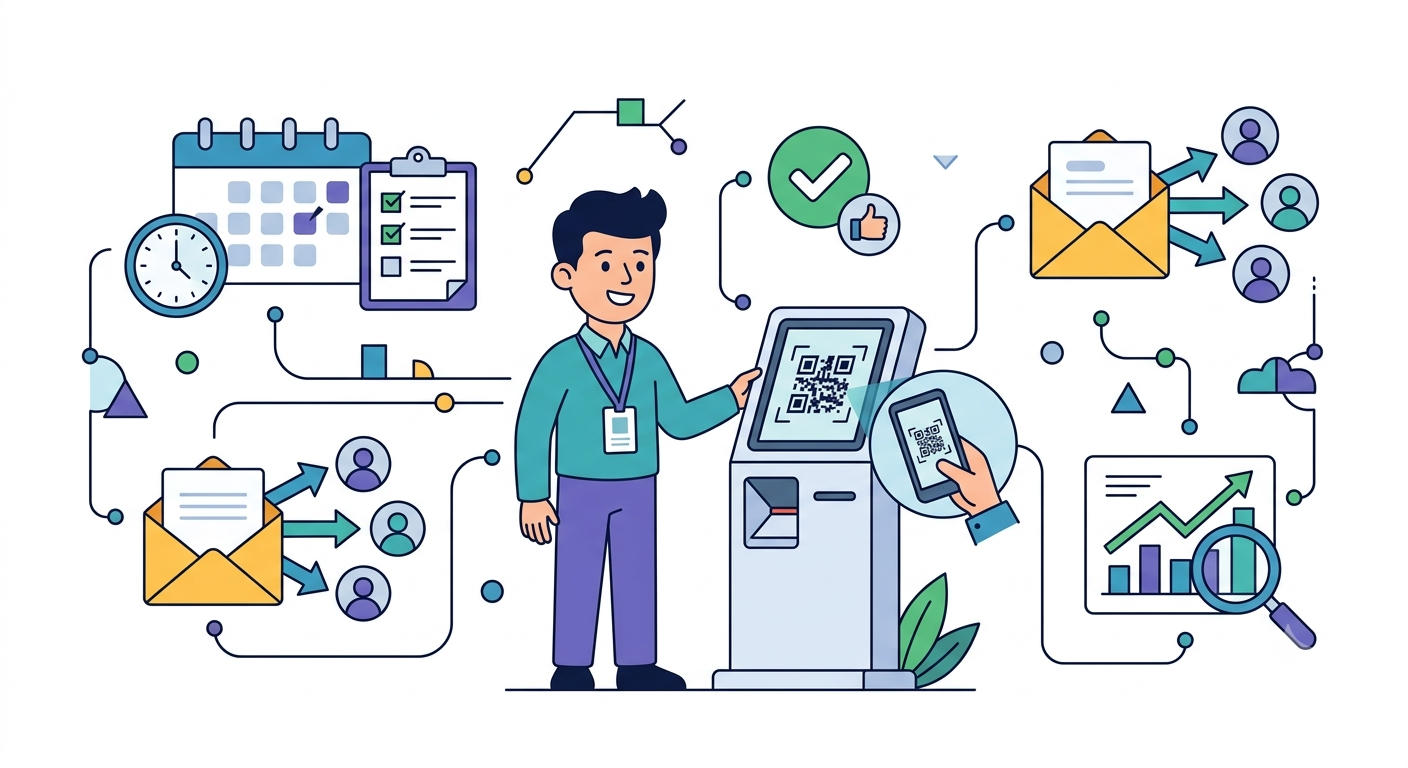
TL;DR: Corporate event guest management follows a structured 6-phase process — guest list planning, sending invitations, pre-event preparation, event-day arrival, in-event monitoring, and post-event follow-up — where every guest is treated as a business relationship, and tools like RSVP tracking, guest segmentation by priority, and QR-code check-in keep the workflow professional at scale.
What Makes Corporate Events Different
Corporate events differ from public events. Guests are typically partners, clients, executives, or internal staff. Each guest represents a business relationship — poor management directly impacts company reputation.
Corporate event characteristics:
- Closed guest list: No public ticket sales, guests are specifically invited
- Multiple privilege groups: Executives, strategic partners, VIP clients, staff
- Security requirements: Guest information is sensitive data
- Management reporting: Leadership needs detailed attendance reports
The 6-Phase Process
Phase 1: Guest List Planning (4-8 weeks before)
Define Event Objectives
Before inviting anyone, clearly answer:
- What is this event for? (partner networking, product launch, client appreciation)
- Which guests are most important for those objectives?
- What’s the ideal headcount? (Too many reduces networking quality, too few wastes budget)
Segment Your Guest List
Divide guests into priority groups:
| Group | Profile | Target Count | Priority |
|---|---|---|---|
| C-suite | C-level, Directors | 10-20 | Highest |
| Strategic Partners | Long-term partners, vendors | 30-50 | High |
| VIP Clients | Major enterprise clients | 50-100 | High |
| Prospects | Active deal negotiations | 50-100 | Medium |
| Media | Journalists, bloggers | 10-20 | Medium |
| Internal | Staff, organizing team | 20-50 | Low |
Approval Process
For corporate events, guest lists typically require management approval:
- Event team proposes the list
- Department heads review and add
- Executive team gives final approval
- Approved list saved in the system
Phase 2: Send Invitations (3-6 weeks before)
Design Professional Invitations
Corporate invitations must convey respect and professionalism:
- Clear subject line: “Invitation: [Event Name] - [Date]”
- Concise content: Event purpose, time, location, reason for inviting them
- Personalization: Address by name, mention the relationship (partner, client)
- Practical info: Map, parking, dress code
- Clear RSVP button: Confirm attendance or decline
Invitation Channels
| Channel | Best for | Response Rate |
|---|---|---|
| Personalized email | All guests | 40-60% |
| Via assistant/secretary | C-level executives | 30-50% |
| Direct phone call | Important VIP guests | 60-80% |
| Zalo/WhatsApp message | Internal groups | 70-90% |
| Printed invitation | Special VIP guests | 50-70% |
Tip: Send invitations on Tuesday or Wednesday — highest email open rates. Avoid Mondays (inbox overload) and Fridays (weekend mode).
Track Responses
Set up an RSVP tracking system:
- Confirmed: Add to official list, send welcome email
- Declined: Record reason, plan to invite for next event
- No response: Remind after 1 week, call after 2 weeks
Phase 3: Pre-event Preparation (1-2 weeks before)
Finalize Headcount
1 week before the event:
- Compile confirmed guest list
- Finalize catering numbers (typically add 10-15% buffer)
- Prepare printed materials (brochures, programs, gifts)
- Assign seating by guest group
Prepare Guest Information
Send a “Getting Ready” email 3 days before:
- Detailed schedule
- Directions (with map)
- Parking information
- QR code for check-in (if using digital systems)
- Emergency contact number for event day
Staff Assignments
| Role | Responsibilities | Count (for 200 guests) |
|---|---|---|
| Lead coordinator | Overall management, problem-solving | 1 person |
| VIP welcome | Personal greeting, escort to VIP area | 2 people |
| Check-in | Scan QR codes, distribute materials | 3-4 people |
| Support | Guide seating, answer questions | 2 people |
| Technical | Handle equipment/network issues | 1 person |
Phase 4: Event Day — Guest Arrival
Setup 2 Hours Before
- Test check-in system, test scan codes
- Prepare welcome desks, signage
- Arrange gifts and materials by guest group
- Check microphone, projector, air conditioning
Guest Welcome Process
- VIP guests: Greeted at private entrance, escorted to VIP lounge, served refreshments
- General guests: Check in at main desk, receive materials, guided to seating
- Media: Separate check-in, receive press kit, directed to filming area
Handling Unexpected Situations
| Situation | How to Handle |
|---|---|
| Guest not on list | Check with coordinator, may be a substitute |
| VIP arrives late | Send someone to the entrance, escort in without check-in queue |
| Guest brings a +1 | Check +1 eligibility, quick registration on the spot |
| Power/network outage | Switch to manual check-in (printed backup list) |
Phase 5: During the Event
- Monitor real-time check-in dashboard
- Report to leadership every 30 minutes on guest count
- Take event photos for PR use
- Capture immediate feedback from VIP guests
Phase 6: Post-event
Internal Report (within 24 hours)
- Total invited vs. actual attendees (attendance rate)
- Breakdown by group: VIP, partners, clients, media
- Comparison with initial targets
- Overall guest experience assessment
Follow-up (within 48 hours)
- Thank you email: Send to all attendees with photos and presentation materials
- Email to no-shows: Apologize, send summary materials, invite to next event
- VIP follow-up: Personalized, with thank-you gift (if applicable)
- Sponsor report: Attendance data, photos, media coverage
Data Archival
- Save complete guest list (attended + no-shows)
- Record feedback and responses
- Archive for future events
Conclusion
Corporate event guest management is a structured 6-phase process: planning, inviting, preparing, welcoming, monitoring, and following up. Each phase requires attention to detail because every guest represents a business relationship. When the process becomes complex with hundreds of guests, QRS helps automate everything from list management to check-in and reporting, saving time and ensuring professionalism.
Frequently Asked Questions
How far in advance should I start planning a corporate event guest list?
The process recommends starting guest list planning 4-8 weeks before the event. This gives time to define event objectives, segment guests into priority groups (such as C-suite, strategic partners, VIP clients, and media), and complete the multi-level approval workflow before invitations go out 3-6 weeks prior.
What invitation channel gets the highest response rate for corporate events?
According to the response-rate benchmarks in this guide, direct channels perform best: a personal phone call to important VIP guests yields roughly 60-80%, and Zalo/WhatsApp messages to internal groups reach 70-90%. Personalized email (40-60%) is the default for all guests, while printed invitations are reserved for special VIP guests.
How many staff do I need to check in 200 guests?
The staffing table suggests around 9-10 people for a 200-guest event: 1 lead coordinator, 2 for VIP welcome, 3-4 at the check-in desk scanning QR codes and distributing materials, 2 support staff guiding seating, and 1 technical handler for equipment and network issues.
What should the post-event report include?
Within 24 hours, leadership should receive total invited versus actual attendees (the attendance rate), a breakdown by group (VIP, partners, clients, media), a comparison against initial targets, and an overall guest-experience assessment. Follow-up thank-you emails, no-show outreach, and sponsor reports should follow within 48 hours.
Sources
- Corporate Events Benchmarking Research Report 2025 - Cvent — annual industry benchmark on corporate event challenges, team structures, and emerging trends.
- 390 Event Statistics Shaping the Industry - Cvent Blog — aggregated event marketing, attendance, and planner statistics used to ground planning assumptions.
- 75+ Event Statistics and Trends - Eventbrite — broad collection of event industry statistics on attendance, RSVPs, and marketing effectiveness.
- ISO 20121:2012 - Event sustainability management systems — international standard providing a framework for managing events of all types and sizes responsibly.
Found this helpful?
Explore more articles on this topic